
Key takeaways
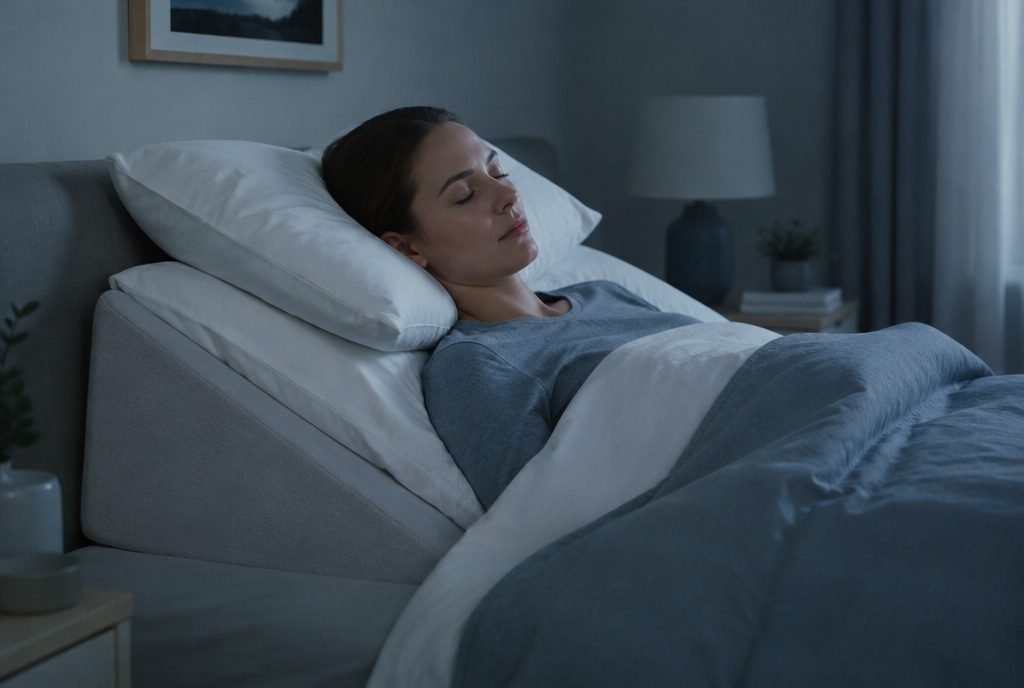
- Raising your head and upper body slightly can ease snoring and mild breathing problems for some people.
- A wedge pillow usually works better than stacking ordinary pillows, which can bend your neck.
- Pillows don’t treat sleep apnea. If you suspect it, see a doctor for a proper diagnosis.
Why your sleeping position matters
Sleep apnea is a condition where your breathing repeatedly stops and starts during sleep, often because your airway narrows or collapses. Many people find their snoring and breathing pauses are worse when they lie flat on their back, because gravity lets the tongue and soft tissues fall back towards the throat.
That’s why changing how you lie in bed can make a difference for some people. It won’t replace treatment, but it can make nights more comfortable.
So, how many pillows?
There’s no magic number. What matters is the angle of your upper body, not how many pillows you use. Piling two or three ordinary pillows under your head mostly bends your neck forward, which can make breathing harder and leave you with a stiff neck.
A better approach is to raise your whole upper body gently from the waist up:
- A foam wedge pillow lifts your back, shoulders and head together at a steady angle. Pair it with one normal pillow for your head.
- Raising the head of the bed with sturdy blocks under the legs does the same job without anything moving during the night.
- An adjustable bed base is the most flexible option, though it costs the most.
Try sleeping on your side
For many people, side sleeping helps more than raising the head. A firm, high pillow that fills the gap between your shoulder and ear keeps your neck straight. A long body pillow behind your back can stop you rolling onto your back in the night.
When to see a doctor
See a doctor if you snore loudly, if someone has noticed you stop breathing or gasp in your sleep, or if you feel exhausted during the day despite a full night in bed. Sleep apnea can be diagnosed with a sleep study, and effective treatments are available. Pillows and positions are a helpful extra, not a replacement.
Medical disclaimer: This article is for general information only and isn’t a substitute for medical advice. If you’re worried about your sleep or your child’s sleep, speak to a doctor or another qualified healthcare professional.
About the author



Leave a Reply